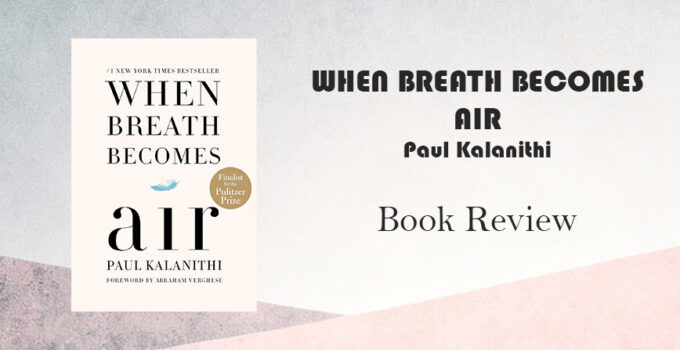
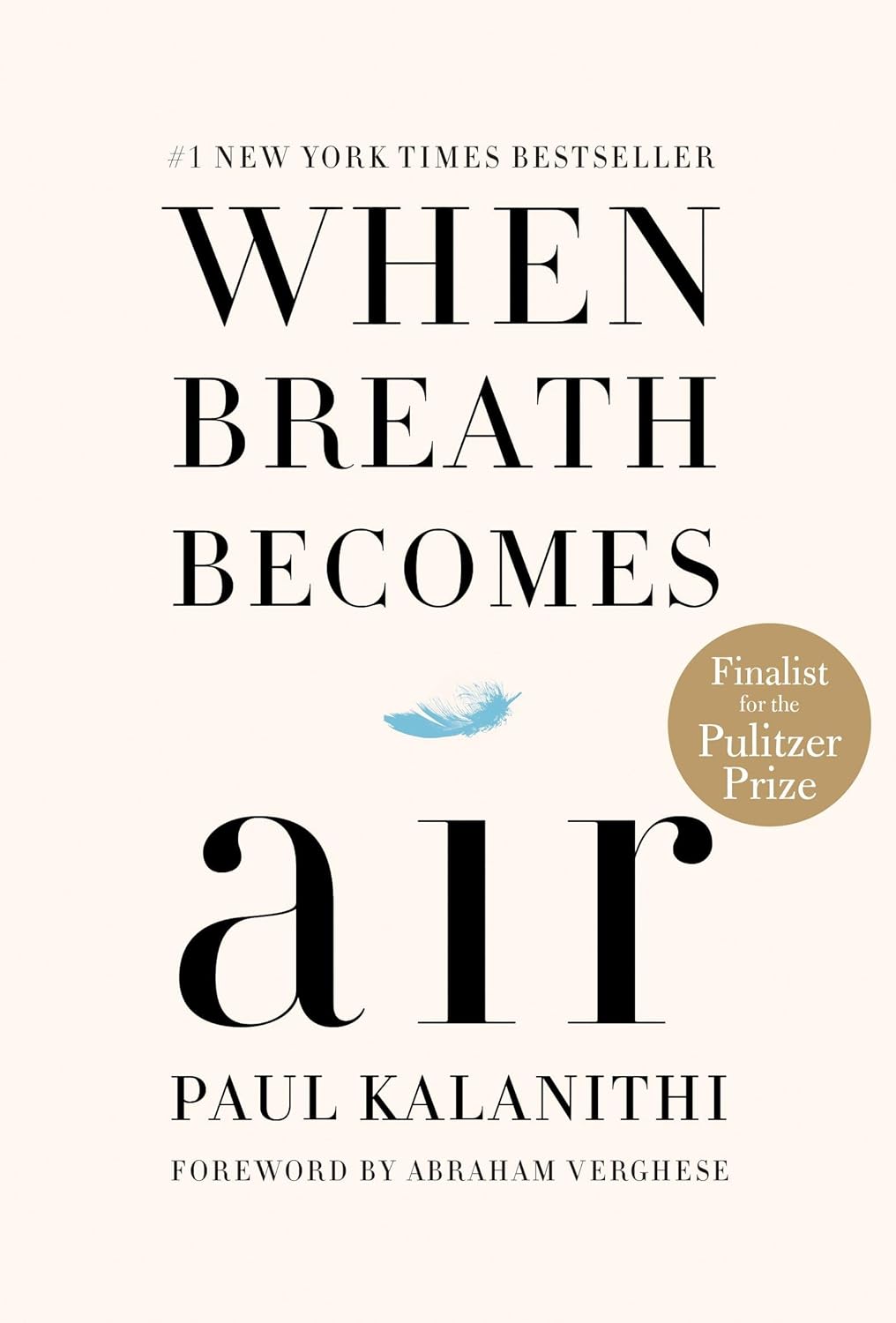
When Breath Becomes Air is a memoir written by Paul Kalanithi while fighting stage 4 lung cancer in his mid-30s. The book is heartbreaking, but also illuminates his two-year struggle after saving countless individuals through brain surgery. Kalanithi explores the philosophy behind life and death, what it means to be alive, the relationship between doctor and patient, and the essence of being through his meandering journey. Doctors are the guardians between life and mortality, but even they can’t control either when calamity strikes. With time dwindling and struggles mounting, he must come to terms with his imminent demise. For this review, I will put less emphasis on writing technicalities and more on his perspective and journey. I think it’s only fitting to focus on the points I took away from this book and my thoughts concerning him.
About Author
Paul Kalanithi was a neurosurgeon and neuroscientist who died of stage four lung cancer that had metastasized throughout his body. He had multiple degrees: a BA and MA in English literature from Stanford University, a BA in human biology from Stanford University, a Master of Philosophy in History and Philosophy of Science and Medicine from the University of Cambridge, and an M.D. degree from Yale University. At Stanford, he finished a residency in neurological surgery and a neuroscience fellowship. During his neuroscience fellowship, he received the American Academy of Neurological Surgery’s highest research award. Cancer struck him in 2013 during his residency. He fought it for two years and died in 2015. Death prevented him from finishing his memoir, When Breath Becomes Air. He left behind his wife, Lucy, and a daughter, Cady, who was less than a year old when he died.
Summary
Raised by sincere doctor parents, who demanded high standards, Paul began his educational career in Arizona with the desire to become a writer. His brother became a computer engineer, and the other brother a neurologist. Science and medicine surrounded him, which inspired him to pursue medicine. There, he graduated cum laude from Yale University. Part one depicts his early life and his bumpy road into medicine.
I found his stories as a resident in the second portion of part one fascinating and often difficult to swallow. Surgeons, including neurosurgeons, get pulled in ten directions at once, work brutal hours, and then must handle patient deaths. They often serve as the line between life and death, but even they could be powerless. For one to attend to patients daily and bear witness to suffering is difficult. It wears you down, numbs, and disconnects you over time, especially when surrounded by death. In one moment, a patient might die during their surgery, and the next might be lunchtime. Balancing such a lifestyle can be daunting. Grief, guilt, pain, and crushed feelings are natural in such a line of work and brutal situations. It’s a grueling profession, yet a special gift to have the chance—even if it may fail—to help those in dire straits. The highs accompany the lows.
Kalanithi saved countless lives on his path to becoming a full-fledged attending physician before catastrophe struck. Part two covers his fight against aggressive lung cancer. Just unfathomable. Each day, his battle continued as he became weaker and the cancer spread. The epilogue brought me to tears. His lungs collapsed slowly, then the brain gave way to tumors. It’s heartbreaking that he never got to finish this book. Or his career as a practicing neurosurgeon and a neuroscientist, saving hundreds of lives each year.
Analysis
Paul’s unrealized potential struck me. It’s difficult to imagine working so hard, earning multiple accolades and degrees, only for it to end prematurely when ready to make the next step as a sought-after attending physician. It’s a devastating fate to have lying in store for anyone.
It led me to a few thoughts.
First, time is often life’s greatest, unbeaten adversary. To someone battling a disease that they know they don’t have a chance against, the seconds become everything. The dreams they had remain right where they were—in the past. They face time to make more while knowing they lack it. The focus shifts to leaving a lasting, enduring legacy. When one faces their mortality, the values they hold dear rise to the surface. Some may try to correct their past, and for others, it may be about making their present more meaningful. Others might employ their limited moments to live vicariously through their final breaths. All while frailty and weakness consume, increasing daily. Writing became Kalanithi’s saving grace and cornerstone once he grasped his vulnerability and kryptonite of time. Victory and defeat both lie within the purview of the ticking clock.
Second, time ultimately catches up. Kalanithi leaves with a story older than history. He writes, “Death comes for all of us. For us, for our patients: it is our fate as living, breathing, metabolizing organisms.” Mortality is difficult to face, but it reaches everyone, some sooner than others. We live here and die there. Where else is there to go? I have come to peace with the fact concerning death, something I’ve reflected on and meditated on many times. Alas, that is the way of things.
Finally, the aftermath. Things became clear when part two ended prematurely for the epilogue. He had more to say, but death arrived before he could speak. We didn’t get the chance to understand his humanity beyond his childhood and medical career. Perhaps if he had more time, he might have written about it. In his waning days, his wife wrote of his passion for life, relationships, and love. We witness a side of him that only others can describe. There’s much to be learned from his journey.
Verdict
I recommend this book. By far, it’s a heartbreaking read, but there’s humanity within these pages. Paul was brilliant, kind, and brave throughout his battle. He showed how kindness instills the only path forward, joy wraps it, and love fills it. It’s a poignant, raw narrative of his early beginnings to his last breath. Hats off to you, Paul, for your bravery, work, and grace.