The Philadelphia Story (1940) – 8.5/10 – A Hollywood Golden Age Classic
Overall
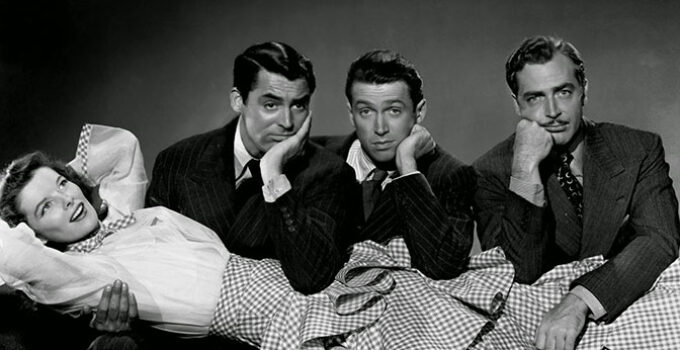
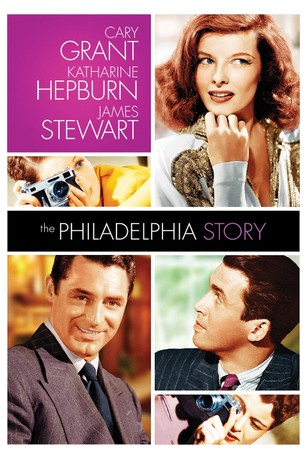
The Philadelphia Story is among the original romantic comedies, but it has aged well. Three classic and beloved superstars—Cary Grant, Katharine Hepburn, and James Stewart—have top billing. These are several of the most versatile legends from Hollywood’s Golden Age. Many consider Hepburn the greatest actress in history, both on the theater stage and on the big screen. Most people include Stewart and Grant on their top 10-15 all-time lists. When this movie was produced, Grant, already a celebrated superstar, received the top billing as Stewart hadn’t reached his superstardom yet. Grant and Hepburn had previously collaborated three times, making them a natural fit. Hepburn experienced flop after flop, earning her the label “box office poison”, but this movie revived her career. With such skilled and charismatic actors together on-screen, success was all but certain. The Academy nominated this for six Oscars: Best Picture, Best Actor in a Leading Role for Stewart, Best Actress in a Leading Role for Hepburn, Best Actress in a Supporting Role for Ruth Hussey (played Stewart’s girlfriend), Best Direction, and Best Screenplay. Stewart won his along with Best Screenplay.
Would I recommend this?
Yes, I recommend this movie. The stars shine as brightly as they ever have. Hepburn regained her faltering career, never looking back. Grant and Stewart continued their stardom into the latter decades—Stewart, of course, later became the legendary Hitchcock’s right-hand actor. I find the cultural differences in older films, from the formal attire to the reserved mannerisms, fascinating and starkly different from today’s casualness. It’s hard to recreate the unique vibe and environment of an old film, one created by people who are now ghosts of a bygone era. Despite significant changes in art over time, certain constants remain the same, such as the emotion you leave with. This is reminiscent of It Happened One Night (1934), the first rom-com. I reviewed that a while ago. While I thought It Happened One Night had a better script and direction, this movie has the superior cast. Both have varying stories and atmospheres. My rating is 8.5/10.
Plot (spoiler-free)
Wealthy C.K. Dexter (Cary Grant) divorces Tracy Lord (Katharine Hepburn). After two years, Tracy then decides to remarry a rich tycoon, George Kittredge (John Howard). C.K. blackmails Tracy the night before her wedding. He brings in two tabloid Spy magazine reporters, Macaulay Connor (James Stewart) and his partner Elizabeth Imbrie (Ruth Hussey), to her mansion. The reporters arrive under false pretenses, but Tracy sees through them. Still, she allows them to cover her wedding, but not before things soon go haywire for everyone involved.
Interesting tidbits
The filmmakers shot this movie in only eight weeks, requiring very few retakes. That’s what happens when you have brilliant actors. Cary Grant demanded top billing at $137,000 (~$3.1 million today), and he donated it to the British War Relief Fund, as the Nazis were steamrolling through France. Hepburn opted to defer her salary for 45% of the profits, which garnered her a ton of money. Stewart believed his Oscar should have gone to Henry Fonda for The Grapes of Wrath (1940), one of my favorites. Billionaire Howard Hughes bought the rights to The Philadelphia Story and gifted them to Hepburn, who kept her role in the Broadway play. The play ran for 665 performances in total. For the film, Hepburn wanted Clark Gable and Spencer Tracy. Gable was busy working on Gone With the Wind, and Tracy, the original choice to perform Stewart’s role, dropped out for Dr. Jekyll and Mr. Hyde (1941). This was among the last movies Stewart made before being drafted into the US Army, fought in the war, rose to Colonel, and returned in 1946 (later promoted to brigadier general in 1959).
Technicals
My favorite aspects were brilliant performances, direction, music, charming 40s atmosphere, pacing, locations, production value, and the dialogue’s execution. You might be tired of my gushing about the trio, but they are perfect casts. If we look at their personalities, they are excellent. Grant is elegant, witty, stylish, and gentlemanly. Hepburn is graceful, gorgeous, sassy, strong-willed, and charming. Stewart is sincere, relatable, polite, timeless, and an underdog. Each personality has its own charm, causing the roles they play to be instantly likable. The supporting cast played off each other, making this the blockbuster it became. Expressions, banter, chemistry, and dialogue presentation are remarkable for the characters portrayed, which speaks volumes for the acting and directing. George Cukor was excellent (he directed Hepburn ten times!). What kept me from giving this a higher rating? A few things. First, I believe the comedy part hasn’t aged well, even if the overall movie has. It wasn’t something that had me rolling with laughter. A few moments caused me to smile, and a couple of chuckles. Second, the dialogue is undeniably witty but not how real people speak. It sacrifices realism for wit, reminding viewers of its endless polishing by writers in a back room rather than natural conversation. The delivery entertains, yet the dialogue sounds more engineered than spoken. Third, the ending strikes me as too abrupt, much like most films from the Golden decades. The ex-husband, fiance, and suitor gather alongside the bride, but the situation resolves with too-convenient ease. All in the last scene, which I won’t spoil.
*Obtained trivia facts from IMDb’s trivia page and plot/basic history/name information from Wiki