Countdown to Oscars 2026
Frankenstein (2025) – 8/10 – The hunter becomes the hunted
Overall
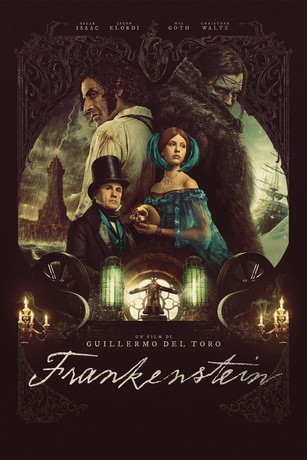
Frankenstein is a horror drama based on a classic 1918 book of the same name by Mary Shelley. I’m not a fan of remakes because they usually exist for monetary reasons. Filmmakers have too many ideas at their disposal to keep rehashing the same ones endlessly. However, Director Guillermo del Toro did an excellent job recreating this story in his own style. He took significant creative liberties with the source material, resulting in something unique and, dare I say, modern. While imperfect, there’s much to appreciate here for cinema fans and readers alike. Del Toro’s experimental, gothic style isn’t something I always prefer, but it was ideal for Frankenstein. This received 9 Oscar nominations, including Best Picture, Best Cinematography, Best Sound, Best Original Score, Best Actor in a Supporting Role (Jacob Elordi), and Best Adapted Screenplay.
Would I recommend this?
Yes, I recommend this! Del Toro executed it masterfully in a way that appears fresh. It’s difficult not to admire this thought-provoking, philosophical story where the created becomes the master and the hunter becomes the hunted. People have written and filmed countless variations over two centuries, yet the original still holds sway. Many 19th-century ideas have aged poorly, but this is not one of them. Frankenstein’s monster speaks more about humanity and life than anything else, which resonates with audiences. One who is broken must live on, for life doesn’t pause for pain. Overall, I suggest you go watch this! My rating is 8/10.
Plot (spoiler-free)
Dr. Victor Frankenstein (Oscar Isaac), a brilliant medical scientist, proposes to cure death through science. His colleagues refuse to allow it, claiming it sacrilege to play God. An arms merchant, Henrich Harlander (Christoph Waltz), seeks Victor to research the science behind reanimation. In return, Harlander offers unlimited funds and resources, including dead bodies from the ongoing Crimean War. Victor creates his monster (Jacob Elordi), and both must live with the consequences. The two must also come to terms with Elizabeth Harlander (Mia Goth), whom Victor loved, and William Frankenstein (Felix Kammerer), Frankenstein’s brother and Elizabeth’s fiancé.
Interesting Tidbits
By Del Toro’s orders not to use CGI or simulation, the team crafted every set. Elordi, who plays the creature, studied Japanese butoh dance and Mongolian throat singing to capture the creature’s mannerisms and styles. It often took the crew ten hours to apply his full-body makeup. He sometimes stayed up through the night for the makeup before early morning shooting. Andrew Garfield was the original cast for the monster before he dropped for Elordi. Del Toro considered turning Frankenstein into a trilogy, but I’m glad he didn’t. Given how a single movie dragged several times in two and a half hours, a trilogy wouldn’t be a smart idea.
Technicals
Frankenstein shone on the big stage behind a massive $120 million budget. The best facets were the 19th-century atmosphere on grand sets, cinematography, visuals, acting, script, music, directing, makeup, and costuming. Within the script, Del Toro included symbolism and witty dialogue. Performances are solid overall among the central cast, which includes Isaac, Elordi, Goth, and Waltz. The side characters were serviceable. Elordi deserves the Supporting Actor Oscar for his excellent portrayal of the monster, who displayed solid character depth. That which people don’t comprehend seems monstrous, which requires strong emotional acting. The positives complement the atmosphere and vibe required for such a cinematic experience. What makes the script succeed is that it maintains the philosophical perspective essential to Frankenstein. Overall, it is poetic justice filled with heart, redemption, and hope.
Poor pacing is where the issues begin. The editors should trim (or remove) several scenes that meandered more than necessary. I’m uncertain of which scenes, but the current framework led to cohesion problems and stretched playtime. Both diluted what could have been. Second, Victor Frankenstein evoked little emotion in me. Shelley’s novel draws sympathy for Frankenstein and his creation—rightfully more for the latter. Here, I experienced similar empathy towards the monster, but Frankenstein himself appeared lacking. Finally, not every character had proper closure. I experienced empathy for Elizabeth, but lacked closure. Henrich Harlander felt present then absent for long stretches. Even William Frankenstein appeared out of sync. Aside from Victor Frankenstein and the monster, I felt wanting.
*Obtained trivia facts from IMDb’s trivia page and plot/basic history/name information from Wiki