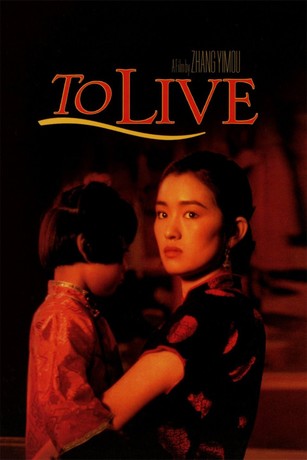
To Live (1994) – 9/10 – The Strength of the Human Spirit
Overall
To Live is a Chinese drama adapted from a novel of the same title. It’s considered one of the greatest movies from China, covering the decades of their revolution. Without getting too deep into politics, Mao Zedong’s China was a dangerous time for its people. Within decades, they underwent two revolutions, each resulting in millions of deaths. Much like the West’s Red Scare, where people faced imprisonment for accusations of communism, China had its own even more violent version against nationalists, then capitalists. Accusations of being a nationalist or capitalist risked loss of status and imprisonment. These acts resulted in tens of millions slaughtered, with others placed into concentration camps for brainwashing. They threw doctors, teachers, and others into jail, beat them, starved them, and killed them in large numbers. It was a purge of knowledge and a consolidation of power under a single-party communist state. As you might expect, the Chinese government banned the movie upon release, prohibiting promotion and public screening. People still accessed it through the black market and eventually online. They barred the director Zhang Yimou from making movies but lifted the ban after years of external pressure. While the setting forms the stage, the characters and their survival take center stage. The title is fitting and touching. Times may change, politics may transform, corrupt politicians may come and go, and tragedies may transpire, but it’s important for one to live and endure the strength of the human spirit.
Would I recommend this?
Yes. It is an ambitious work worth watching that covers multiple decades within 2h13m. The filmmakers created a masterpiece that most people will remain unaware of its existence. Instead of depicting a high-level scope, we get a breakdown from the ground perspective of a poor family trying to survive a tyrannical government. Everyday individuals are the ones who endure the greatest hardship in such events, and they’re the ones who must live through them. While the film avoids political commentary, it covers the suffering in remarkable detail. Political commentary is unnecessary when your eyes and ears show everything necessary. The results and events speak for themselves. My rating is 8.5/10.
Plot (spoiler-free)
In 1940s China, Fugui’s gambling addiction forces him to lose everything, including his wife Jiazhen and their children. Fugui starts a puppetry troupe to make his living and win back Jiazhen. Slowly, he must put his life together as China goes through a bloody civil war. On one side are Mao’s communists and the other has General Chiang Kai-shek’s nationalists. The communists win and expel the nationalists to Taiwan. Society changes over time under the victorious communist regime, and Fugui, Jiazhen, and their children endure struggles and hardships through the 50s, 60s, and 70s.
Technicals
To Live is a simple film, but it depicts immense depth through the simplicity. The performances, direction, script, pacing, authentic soundtrack, set design, camerawork, and storytelling were outstanding. With its atmosphere, acting, and realism, the film provides a memorable cinematic experience. Director Zhang lived through these times and drew on personal experiences to inform his storytelling. Such movies often drag, but I didn’t experience that here. The narrative’s pacing grips your interest, and the characters make you feel as though you’re journeying alongside them. One may live in a different culture, but everyday struggles are unavoidable. Every individual requires things such as food, shelter, social connection, dignity, compassion, and health. The story and characters draw you in through empathy and humanity, as it’s human to build empathy when we notice others suffering. Zhang added humor, optimism, joy, inspiration, and love within the confines of this melancholic gem. I have one criticism. The movie doesn’t fully represent the destruction and mass murder that happened during the events depicted. Zhang maintained restraint to prevent his work getting banned in China. Ironically, that restraint didn’t stop it from getting banned.
*Obtained trivia facts from IMDb’s trivia page and plot/basic history/name information from Wiki