Places in the Heart (1984) – 8/10 – The human spirit’s journey through hardship
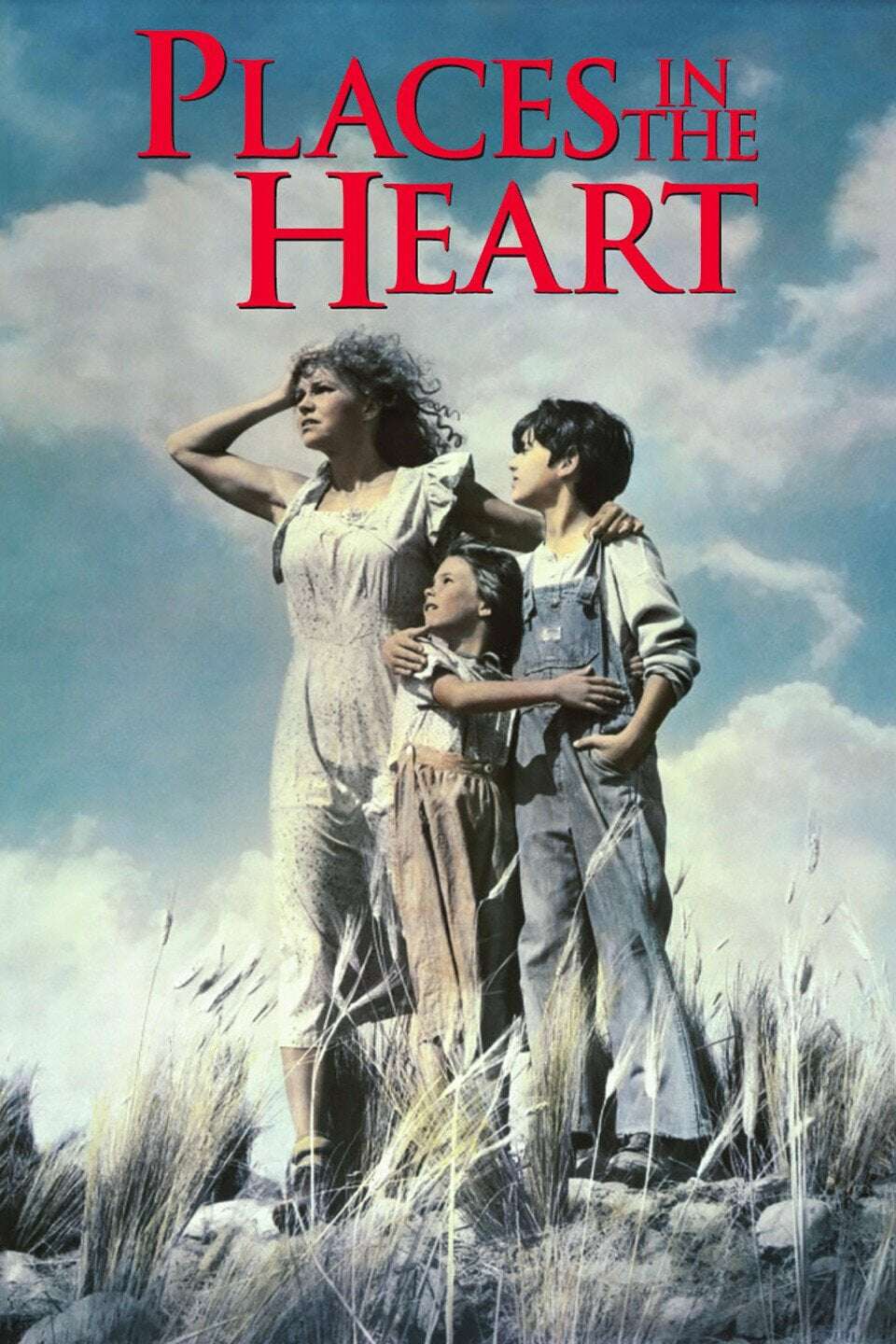
Overall
Places in the Heart is a period drama depicting 1935 Waxahachie, Texas. Director and writer Robert Benton grew up there in the 1930s, so he uses his experience and childhood memories as inspiration. This era, following WWI, the Spanish Flu, and the Roaring Twenties, created hardship in American (and world) history that led into WW2. The economy had crashed years earlier, poverty was rampant, and segregation was ongoing. This touching film poignantly sets the scene within those trying circumstances and suffering characters. This covers themes such as love, kindness, prejudice, resilience, sin, hope, community, and forgiveness. For one to find hope in such times, it takes inner strength. It’s a testament to the human spirit through trials and tribulations, a relatable human condition. People can overcome challenges if they face them together without sacrificing values or giving up hope. This movie received seven Oscar nominations and won two—for Best Actress (Sally Field) and Best Screenplay/Writing.
Would I recommend this?
Yes, I recommend this movie. There’s authenticity and optimism behind the darkness, and the triumph of togetherness regardless of odds and circumstances. It fits the 1920s era it portrays and captures the 1980s that shaped it. While not perfect, it’s worth a watch. My rating is 8/10.
Technicals
Places in the Heart is a wonderful movie that embodies the atmosphere and essence of the 1930s. The acting, direction, original story, pacing, costume design, photography, and music are excellent. While the entire talented cast was sensational, Sally Field won her second Oscar here (Norma Rae being the other). Each character in Edna’s circle is likable and empathetic to her cause. External characters, such as those who try to take advantage of her and hurt Moses, add depth to the narrative. The pacing keeps the entertainment value flowing. Though not glamorous, the location wholly suits the story. Of the issues, the biggest one was irrelevant subplots that went nowhere. Do we need scenes involving secondary characters’ affairs that have nothing to do with the plot? The only explanation I’ve is they used that as an excuse to include lightly steamy scenes. It pulled focus and emotion from the overall story, and the transition felt jarring. I have no issue if it hinting at infidelity, but full-blown scenes looked unnecessary. Second, it often appeared clichéd and predictable, except for moments. Often, clichés are unavoidable.
Plot (spoiler-free)
During the Great Depression, a widow, Edna Spalding (Sally Field), with two kids must figure out a game-plan to hold on to their house and 40 acres of land. She had lived a sheltered life and lacked basic knowledge, including how to fill out checks. Others try to take advantage of her vulnerability for their benefit. The bank pressures her to sell her home, and her sister offers help. But Edna has other ideas. Giving up her house and taking charity isn’t in her nature. A homeless and poor black man, Moses (Danny Glover), offers to work for her in return for daily meals and a room to stay. His talent and expertise lie in planting cotton, which Edna accepts. She also takes in a paying boarder, the blind Mr. Will (John Malkovich). Together, they must collect enough money to fend off the bank, storms, and the Ku Klux Klan.
*Obtained trivia facts from IMDb’s trivia page and plot/basic history/name information from Wiki