

A Man Escaped (1956) – 8.5/10 – Simple but masterful French film
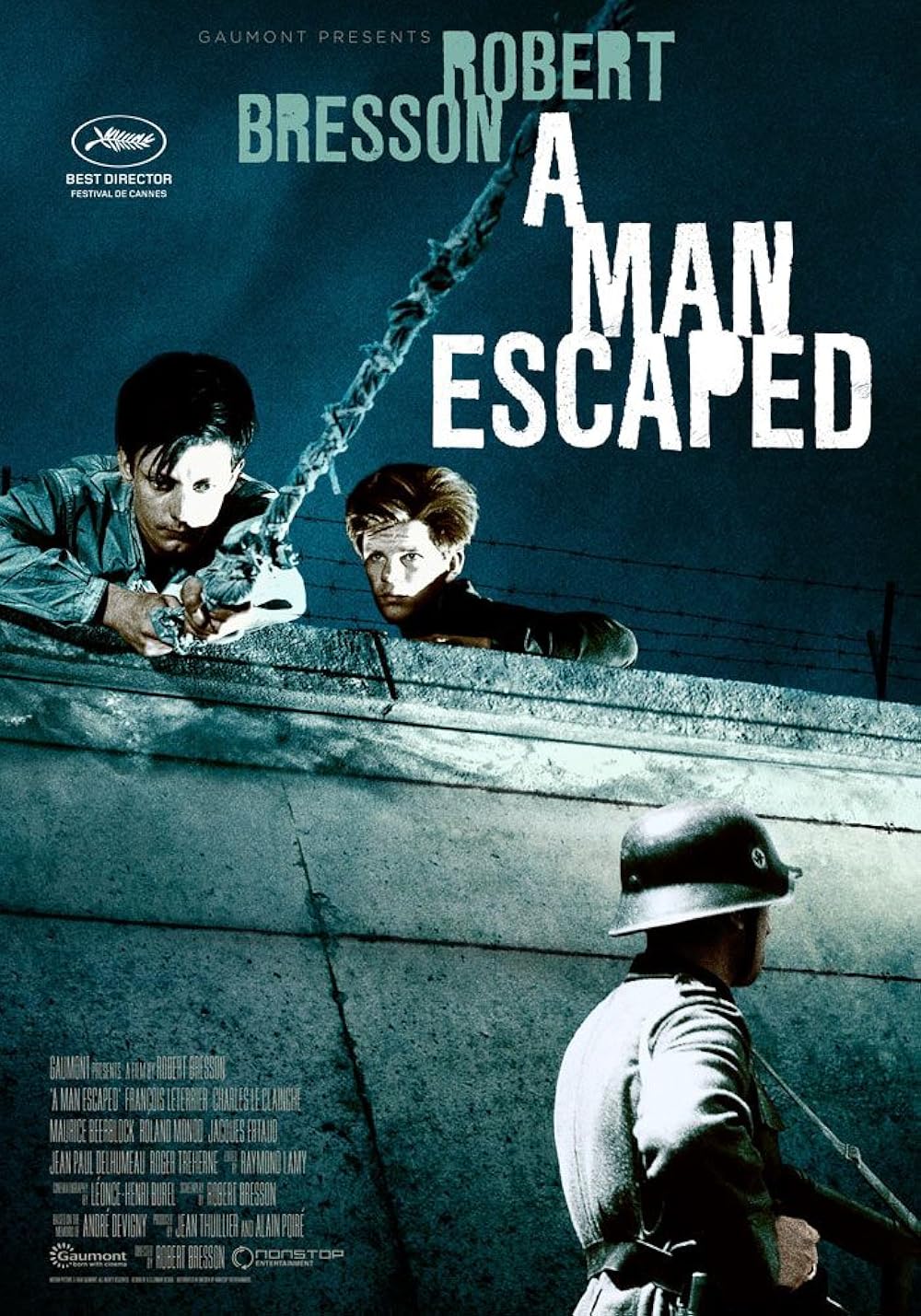
A MAN ESCAPED (Original title was Un Condamné à Mort S’est échappé) is a 1950s prison escape drama from France. It’s based on a memoir by Andre Devigny, who was a member of the French Resistance during WWII and escaped from Nazi-run Montluc prison. This is one of the best prison escape movies I’ve ever seen. While I’m unfamiliar with the actors, director, or crew/writers, the depiction and attention to detail impressed me. Director Robert Bresson left no rocks unturned in his push for authenticity. He hired Devigny as an adviser, and the film was shot in the same prison, which was active in 1955. They moved the prisoners during the two weeks of filming. Bresson used Devigny’s original ropes and hooks. The gripping tension keeps you on the edge of your seat, wondering how he will plot his escape and whether he will get caught. The title already announces that he escapes, so there’s no spoiler there.
The Germans transport young Lieutenant Fontaine (Francois Leterrier) of the French Resistance to Montluc prison. During the drive, he attempts to escape from the vehicle. The Germans catch him, beat him, and throw him into isolation after threatening execution. Each day, gunfire from executions woke up Fontaine. He knew time wasn’t on his side, and doing nothing meant joining the dead soon. The guards fed him scraps for meals and kept him in handcuffs 24/7. He befriends a prisoner named Terry, who secretly passes him pen/paper. Fontaine writes to his family and the French Resistance, informing them of his circumstances and information. For proper conduct, guards move him from isolation to another cell and remove his handcuffs. Upon noticing flaws in the wood used to build his cell, he plans his escape. Other prisoners around him help him by doing things, such as warning him of approaching guards. Over time, he and his partner, Jost (Charles Le Clainche), continue to work his plan into fruition.
Overall, the film was fun even if the pacing was slow. Some may find the slow pace boring, but it’s worth it. Bresson clung to realism for the escape, which requires meticulous and subtle buildup. There’s no way around it for true authenticity. I found the best aspects of this film begin with amazing direction, sensational acting by a non-professional cast, masterful usage of sounds, camera work, and Mozart score. Simplicity is key because of the low budget, but it never feels like they took shortcuts. I thought the Mozart pieces were brilliant. I see Mozart, Beethoven, and Bach as gods of music. While the movie is mostly slow-paced, the tension intensifies in the last 45 minutes. There isn’t much dialogue here; the film relies on actions and expressions. Most of the spoken parts are voice-over narration in documentary format.
Would I recommend this? Yes, I recommend this film. I had no issues reading the English subtitles to go with the spoken French, which I understand in bits. After watching many prison escape films before, I found this intense, even if slow-paced. I place only SHAWSHANK REDEMPTION and THE GREAT ESCAPE above this. ESCAPE FROM ALCATRAZ, PAPILLON, and STALAG 17 are part of the argument. My rating is 8.5/10.
*Any trivia facts were obtained from IMDB’s trivia page and plot/name information from Wiki



No Responses