Atonement (2007) – 8.5/10 – How One Lie Destroys Everything
Overall
Atonement is a period drama adaptation of Ian McEwan’s novel of the same name. McEwan wrote a brilliant story that became one of my favorites, and the adaptation is among the finest I have ever watched. This work received 7 Oscar nominations in 2008 and won one for Best Original Score. My book review from last year of Atonement: https://www.harshmode.com/atonement-2001-book/
The perspective from which an individual witnesses an event defines how it’s understood. When someone lacks the means to comprehend an event, they might try to explain it to the best of their abilities. When there’s nothing to rely on, they may resort to embellishments and lies to find explanations. The ramifications of such lies can leave permanent scars and cannot be taken back, especially when they destroy careers and livelihoods. They can affect the ones whose lives they destroyed and also those who tell them. It’s something a child may not understand, and the results could be devastating. The themes include innocence, love, imagination, guilt, and redemption.
Would I recommend this?
Yes, I highly recommend this coming-of-age drama. The impressive way they maintained the original atmosphere and emotional depth speaks volumes of the production quality. The best part is that it avoids becoming a melodramatic pity party. This movie is for you if you enjoy intricate stories, emotional depth, and tragic drama. Some may view this as a slow-burn if they don’t appreciate subtlety. Top to bottom, this cinematic experience by director Joe Wright is impeccable. My rating is 8.5/10.
Plot (spoiler-free)
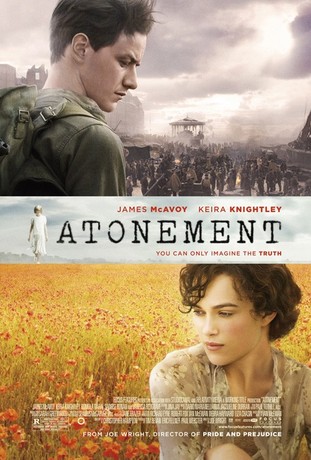
In 1930s Britain, thirteen-year-old Briony Tallis (Saoirse Ronan) watches her older sister, Cecilia (Keira Knightley), interact strangely with their kind neighbor, Robbie Turner (James McAvoy). Briony, in her naivety, misinterprets a series of events between the two, resulting in a terrible lie. Her innocent lie leads to serious consequences for the three and countless other lives.
Interesting Tidbits
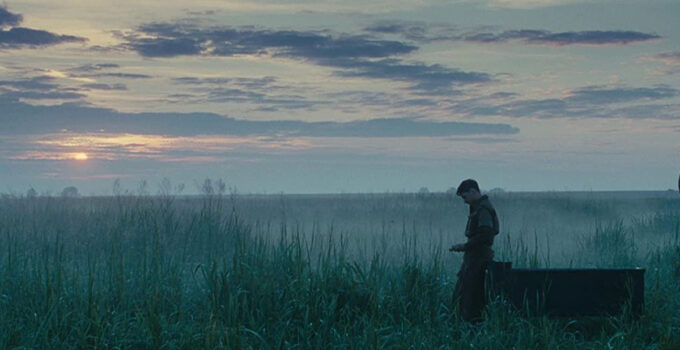
Only eight British military ambulances from WWII remained when this movie was being produced, and so they used all eight. Saoirse Ronan, who plays Briony, was only 12 during the filming and received her first nomination as Best Actress in a Supporting Role (well-deserved!). It’s unfortunate that her competitors included several seasoned veterans. The five-minute Dunkirk scene took three weeks of set preparation and two weeks to restore the area afterward. They shot it with only one camera, without a single cut. The original film version was nonlinear, but test audiences disliked the structure. Producers re-edited it for many months before releasing a more linear cut.
Technicals
Few adaptations live up to the expectations set by beloved novels, but Atonement is an exception. The performances, direction, script, cinematography, music, era-appropriate costume design, locations, and atmosphere are exceptional. McAvoy, Ronan, and Knightley did an amazing job. McAvoy and the gorgeous Knightley are outstanding actors with chemistry that fits like a glove. I cannot compliment the atmosphere of the era enough. The keen attention to detail feels as if you walked into 1930s Britain and 1940s France.
I loved the Dunkirk scene that ran for five minutes without a cut. Such complex shots require precision because every detail has to go right. They must execute the lighting, interactions, dialogue, expressions, and camerawork with no mistakes. A single mishap can ruin everything. The crew cannot re-shoot it repeatedly.
I noted a few issues. First, I didn’t fully perceive the attraction between Cecilia and Robbie throughout their scenes. The charming depiction of their romance in the book allowed one to appreciate their attraction. That sentiment is not captured here, even though the reenactment is exact. Second, the novel ends on a nostalgic note that is absent here. Filmmakers tell Briony’s side at the end rather than show it, which appears to be a medium limitation. A film can come close but never depict a novel to perfection. Finally, portions of the editing appear uneven. The book alternates perspectives and overlaps events non-linearly. The movie tries to replicate it to a degree, but it’s not optimal when picturized.
*Obtained trivia facts from IMDb’s trivia page and plot/basic history/name information from Wiki