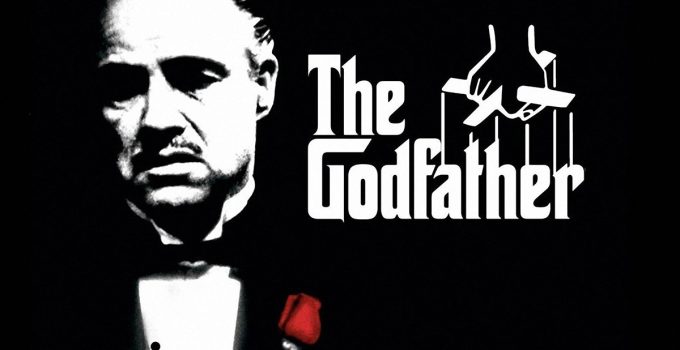
The Godfather (1972) – 9.5/10 – The mobster film to start it all

‘The Godfather’ is my second favorite film of all time. I watched this film many years ago and barely remember it. I decided to rewatch my favorite movies at every 25th review (Originally every 50th review). This film is legendary and has become a cliche. However, I don’t see it as cliched because it was the original that took the mobster genre to another stratosphere. This film (and The Godfather II) set the standard for the mobster genre, against which all other crime films are compared. I won’t go into detail about the plot because it’s well-known. Don Vito Corleone (Marlon Brando), the Godfather, runs a mafia syndicate out of New York. His son, Michael (Al Pacino), returns home as a World War 2 Army veteran at the war’s conclusion, accompanied by his girlfriend, for his sister’s marriage. Michael, often seen as the perfect child, wants nothing to do with the family business. During Vito’s reign from 1945 to 1955, things go awry when his rival, Don Sollozzo, attempts to bring the Corleone family into the narcotics business. Vito refuses to enter the narcotics business, and things fall apart for the Corleone family. Certain actions and decisions force Michael to join the fray. A massive mob war erupts between the five families of New York/New Jersey, with the Corleone family in the middle of it all.
I was even more engrossed watching this for the second time. ‘The Godfather’ set a new standard in memorable action scenes, brilliant writing (and classic dialogue), photography, cinematography, remarkable music, production, editing, masterful directing, pacing, acting, you name it. I’m hard-pressed to find issues with it. If Francis Ford Coppola remade it today, he might quicken the pacing and remove a few scenes. Coppola changed the trajectory of his career and the cast, who became sought for other films after Godfather’s success. Many consider Marlon Brando the greatest actor in history, which was debated before this film, but this performance sealed the deal. So were Richard Castellano (the highest-paid actor from The Godfather), Robert Duvall, and James Caan. Others, including Al Pacino, Diane Keaton, John Cazale, and Talia Shire, rose to stardom after this film (and Robert De Niro from The Godfather II). That’s just from the cast, but many crew members also saw their reputation grow. Godfather changed not only the mobster genre but future crime films. While some may see it as mindless violence, I think there’s a sort of honor, code, and values behind each action. It covers themes like family, loyalty, power, morality, corruption, misplaced trust, and the American dream of achieving wealth by any means. All backed by the central elements of lies, backstabs, murder, betrayal, and crime. There’s something to be said about the life that writer Mario Puzo and Coppola instilled into this film.
Some interesting tidbits. Jack Nicholson turned down the role of Michael; Dustin Hoffman and Martin Sheen were passed up. James Cann won the Michael role, but Francis Ford Coppola pushed hard for Al Pacino. The rest is history. Several other stars (Warren Beatty and Robert Redford) received offers for Vito Corleone’s role before Marlon Brando accepted. The producers initially opposed Brando because he was difficult to work with and had behavior issues. One character, Johnny Fontane, resembles Frank Sinatra, who threatened to beat up the writer, Mario Puzo. This film was first offered to legendary director Sergio Leone, but he refused. He felt it glorified the mafia and wasn’t interesting. Coppola also felt it glorified the mafia, but he signed on after being explained the story’s central theme revolved around capitalism. Godfather won Oscars in 1973 for the best picture, best actor (Brando), and best writing.
Would I recommend this? Yes, it’s a must-watch film. It glorifies the mafia to a degree, but it’s a phenomenal film. It’s a masterclass on scriptwriting, directing, and acting that compels you to watch if you respect film as an art.